
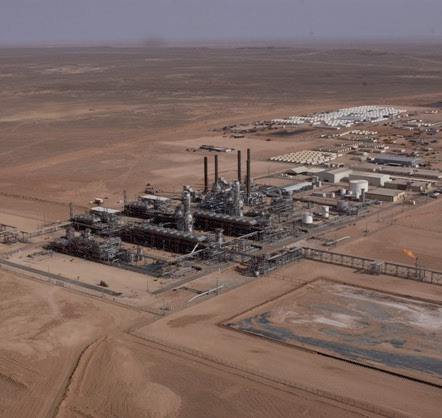
Il giacimento di gas di In Salah si trova nella parte algerina del deserto del Sahara a circa 1200Km a sud di Algeri; è il terzo più grande polo del gas dell’Algeria ed attualmente ha una capacità produttiva di circa 9 miliardi di metri cubi di gas all’anno. Il sito estrae gas naturale da 7 giacimenti,
e tramite una condotta lunga 500 Km lo invia al punto di raccolta di gas di Hassi R’Mel, da dove viene esportato verso i mercati di Italia e Spagna. In Salah rappresenta anche il primo progetto su larga scala di recupero di anidride carbonica in un giacimento di gas; Circa un milione di tonnellate di CO2 sono re-iniettate nel sottosuolo ogni anno.
The In Salah gas field is located in the Algerian part of the Sahara Desert approx. 1200km south of Algiers; It’s the third largest hub of Algerian gas and currently has a production capacity of approximately 9 billion cubic meters of gas per year. The site extracts natural gas from 7 fields, and through a 500 km long pipeline, sends it to the point of collection of gas Hassi R’Mel, from
where it is exported to the markets of Italy and Spain. In Salah project also represents the first large-scale recovery of carbon dioxide in a gas field; Approximately one million tons of CO2 are re-injected into the reservoir every year.
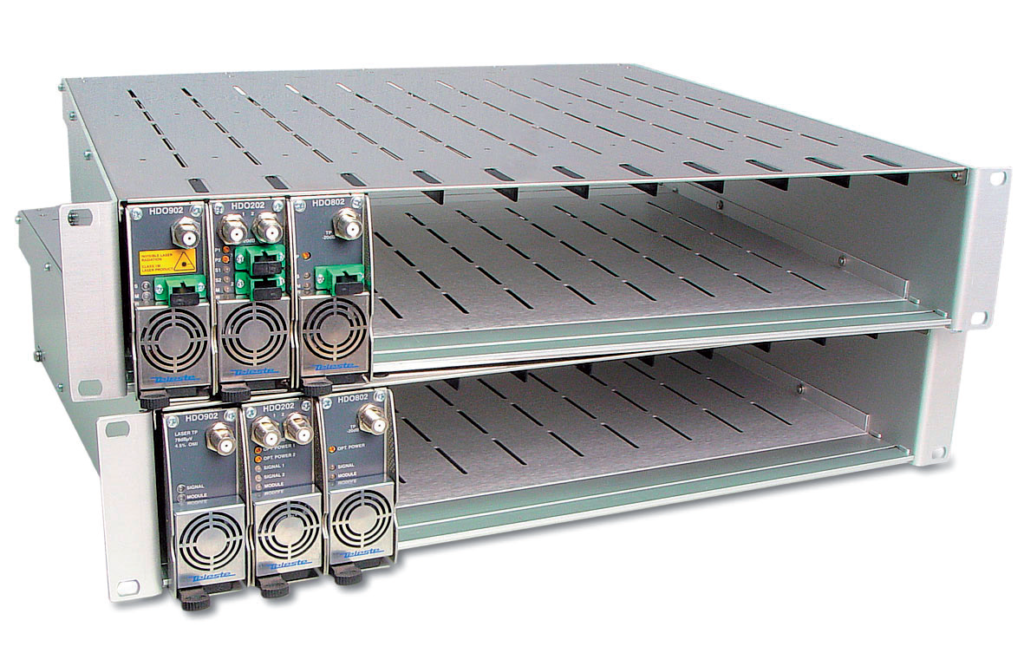
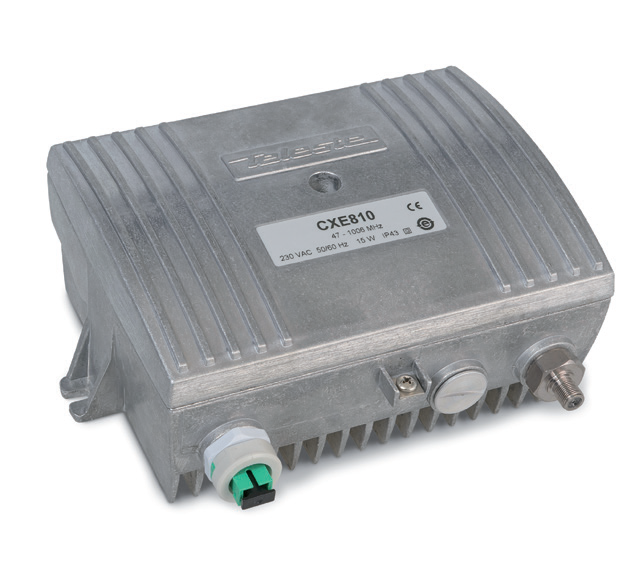
La rete è realizzata interamente in fibra ottica single mode; si dirama dalla stazione di testa a 20 nodi periferici, ciascuno dei quali è composto da un ricevitore ottico CXE 800 Teleste che converte e distribuisce i segnali alle prese d’utenza via cavo coassiale. La stazione di testa è costituita da 6 centrali tipo PSU 8-16 Profi Line di GSS equiintersat paggiate con 41 moduli twin per la ricezione di programmi da satellite in QPSK e la modulazione nell’impianto di 82 canali TV in PAL, che vengono diffusi nella rete grazie all’adozione di un trasmettitore a 1550nm, in abbinamento ad
un amplificatore da 19dBm. Per proteggere la centrale di testa da eventuale sovratensioni, sono stati installati 16 EMP Protector della casa svizzera HUBER+SUHNER.
The network is made entirely of single mode fiber optic cable; branches off from the head station, arriving to 20 peripheral nodes, each consisting of an CXE 800 optical receiver of the Finnish company Teleste,and from there distributed to final users by coaxial cable. The head station is built of 6 PSU 8-16 Profi Line from GSS, equipped with 41 twin digital modules, for the reception of QPSK satellite services and their modulation in 82 TV channels broadcasted in PAL, which are transmitted over the fiber network thanks to the adoption of an 1550nm transmitter in combination with a 19dBm amplifier. To protect the headend station from any surges,a group of 16 EMP protector from the swiss company HUBER+SUHNER were installed.